

How To Get Into University Of Cambridge: Building A Competitive Application
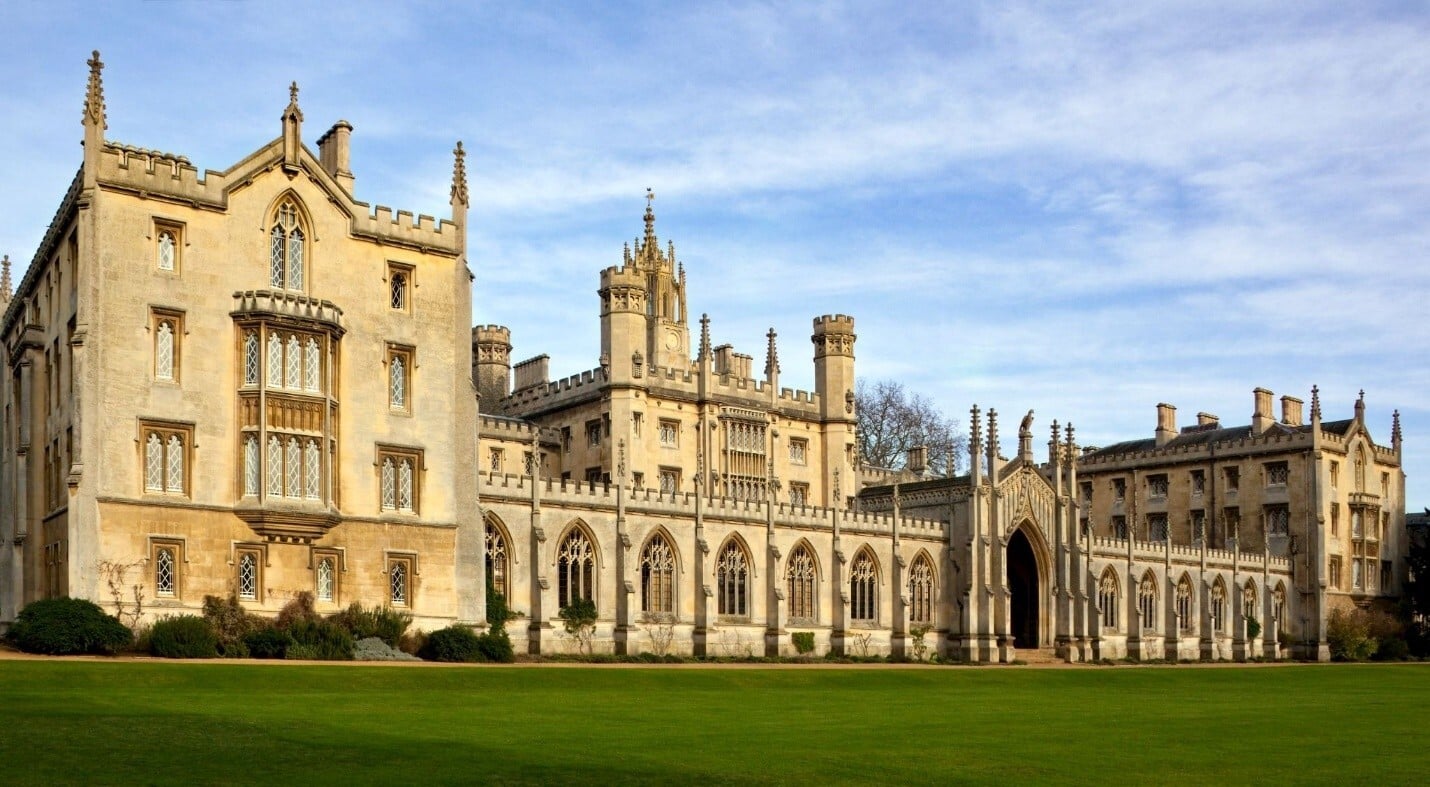
Getting into the University of Cambridge takes top grades, sustained engagement with the subject built up from Year 12 rather than left until the application itself, and a track record that holds up under an admissions test where one applies. It also takes the ability to think clearly under pressure at an interview, built around a specific course and college rather than a generic application.
What tends to make an applicant stand out is not a longer list of achievements but depth, a handful of activities properly understood and connected back to formal study. Knowing how to get into Cambridge starts early and with an understanding of how these pieces fit together, since the university weighs them as a whole.
What Are The Chances Of Getting Into Cambridge University?
Cambridge receives, on its own figures, about six applications for every place available, averaged across all subjects, or roughly one offer for every six applicants. The figure for any individual case varies a great deal by course and college, since some subjects run far more competitive than others. Chances of getting into Cambridge University are, in other words, a range rather than a single number, shaped by both the strength of an application and which college it goes to.
College choice is worth taking seriously here. Cambridge's 2025 admissions statistics put the university-wide success rate at 16.3%, but that figure hides substantial variation. Pembroke accepted just 13.2% of applicants, with Trinity and Emmanuel close behind at around 14%. Fitzwilliam and Homerton ran more open at 17% and 19.1%, and St Edmund's, a small college that also admits graduates, accepted more than a quarter at 27.6%, over twice Pembroke's rate. Cambridge's own guidance frames the choice of college around fit rather than strategy, but the numbers make clear it is not a neutral decision.
What Grades Does Cambridge Require?
For students researching how to get into University of Cambridge, understanding the academic entry requirements for their chosen course is an important starting point.
There is no single grade requirement across the university, though a pattern emerges by course. Natural Sciences, Economics, Medicine, and Computer Science all set the same minimum offer: AAA at A-level, or 41 to 42 IB points with 776 at Higher Level. Law asks slightly less, A*AA or the same IB offer. Medicine adds a subject requirement on top of its grades, Chemistry plus two further subjects from Mathematics, Biology, or Physics. Cambridge may make a higher offer still where competition is strong or exams were sat early. Checking the specific course page is the only reliable way to know what a given application needs.
Is An Admissions Test Required?
It depends entirely on the course. Cambridge has no single universal test. Engineering, Natural Sciences, Chemical Engineering. and Veterinary Medicine applicants sit the ESAT. Mathematics, Economics, and Computer Science applicants sit the TMUA, Medicine applicants sit the UCAT, and Law applicants sit the LNAT. Around twenty further courses use a college-administered assessment instead, usually after an interview invitation, and a handful, among them Archaeology and Theology, ask for none at all.
How Can An Applicant Demonstrate Subject Interest?
Cambridge draws a clear line between super-curricular activity, anything that deepens knowledge of the subject itself, and extra-curricular activity, which sits outside it. Only the former carries weight in admissions decisions. Its own guidance points to reading beyond the syllabus, subject-specific documentaries and podcasts, and any academic project pursued off a student's own initiative, with reflection mattering more than how many activities have been fitted in.
What Happens At A Cambridge Interview?
If an offer is going to be made, an interview will have happened first. Most invitations go out in November, and the bulk of interviews take place in the first three weeks of December, either online or in person. Cambridge describes the format as an academic conversation rather than an exam, typically one or two sessions lasting 35 minutes to an hour in total, with two or three interviewers per session. The aim is to see how an applicant thinks when handed material they have not met before. Performance here sits alongside academic record, reference, personal statement, and test results when a college makes its final decision.
Practice matters more than most candidates expect. Cambridge's own preparation guidance recommends rereading the personal statement shortly before the interview, since questions often start there. Talking through the subject out loud with a friend, family member, or teacher also helps build fluency under pressure. A proper mock interview, ideally with someone who does not already know the candidate well, is worth arranging where possible, since it exposes the gap between understanding something and being able to explain it clearly to a stranger.
What Is The Cambridge Pooling System?
Being turned down by a first-choice college is not automatically the end of an application. Around 18% of October 2025 applications entered Cambridge's winter pool, where a college impressed by an applicant but without a place passes the application to other colleges with space remaining. In January 2026, roughly one in four pooled applicants received an offer elsewhere, so a pooled application is a live one, not a rejection in waiting.
Frequently Asked Questions
How many people apply to Cambridge for each place?
About six, on average across all subjects, though the figure varies considerably by course.
Does every Cambridge course require an admissions test?
No. A dozen or so subjects use a pre-registration test such as the ESAT, TMUA, UCAT, or LNAT, roughly twenty use a college assessment after an interview invitation, and a small number ask for no test at all.
What if a preferred college doesn't offer a place?
It may still be reconsidered through the winter pool, where around one in four pooled applicants receives an offer from a different college in the same cycle.
How important is the personal statement for a Cambridge application?
Cambridge reads every personal statement in full, without a formal score, alongside the rest of the application. Specific, reflective evidence of subject engagement carries more weight than length.
Does the choice of college affect the chances of getting in?
Yes, to a meaningful degree. Cambridge's 2025 statistics show college success rates ranging from around 13% at Pembroke to over 27% at St Edmund's. When considering the chances of getting into Cambridge University, applicants should also look at the competitiveness of their chosen course rather than focusing solely on college acceptance rates.
Why Course And College Both Need To Be Specific
Every section above points to the same pattern: nothing about a Cambridge application works generically, and a competitive one is built by researching the exact course and, ideally, the exact college early, rather than relying on a strong but generic profile. Understanding how to get into Cambridge means focusing on the specific academic requirements and admissions process for your chosen course.
Key Takeaways
- Cambridge receives around six applications per place on average, though this varies widely by subject and college.
- College success rates differ substantially, from around 13% to over 27% in the 2025 cycle, so college choice is not neutral to the odds.
- Grade requirements differ by course: Natural Sciences, Economics, Medicine, and Computer Science ask for AAA, Law for A*AA, and the IB threshold holds close to 41 to 42 points with 776 at Higher Level across all of them.
- Admissions tests vary by course, from the ESAT and TMUA to college-run assessments, and a handful of subjects require none.
- The winter pool means a strong application not placed at one college can still receive an offer elsewhere.
Get Expert Guidance On A Cambridge Application
There is no single trick to getting into the University of Cambridge, only a series of course-specific and college-specific decisions made well and made early.
Path Education works with students on exactly that: choosing the right course and college, preparing for the ESAT, TMUA, UCAT, or LNAT where required, building interview fluency, and developing the subject depth Cambridge is looking for. Get started with Path Education.
Image Source: Envato
